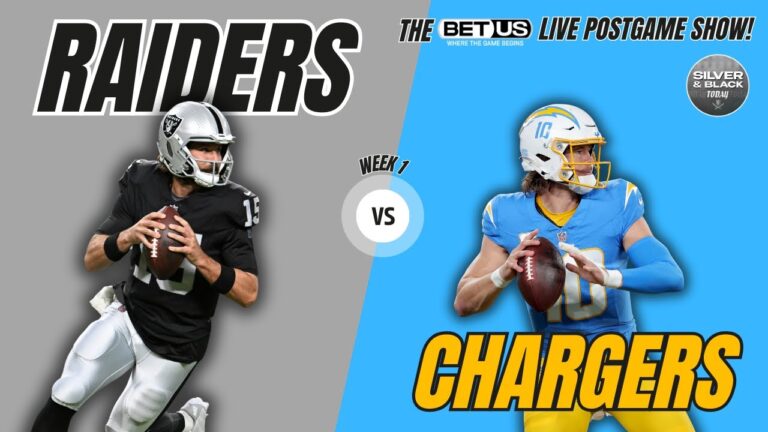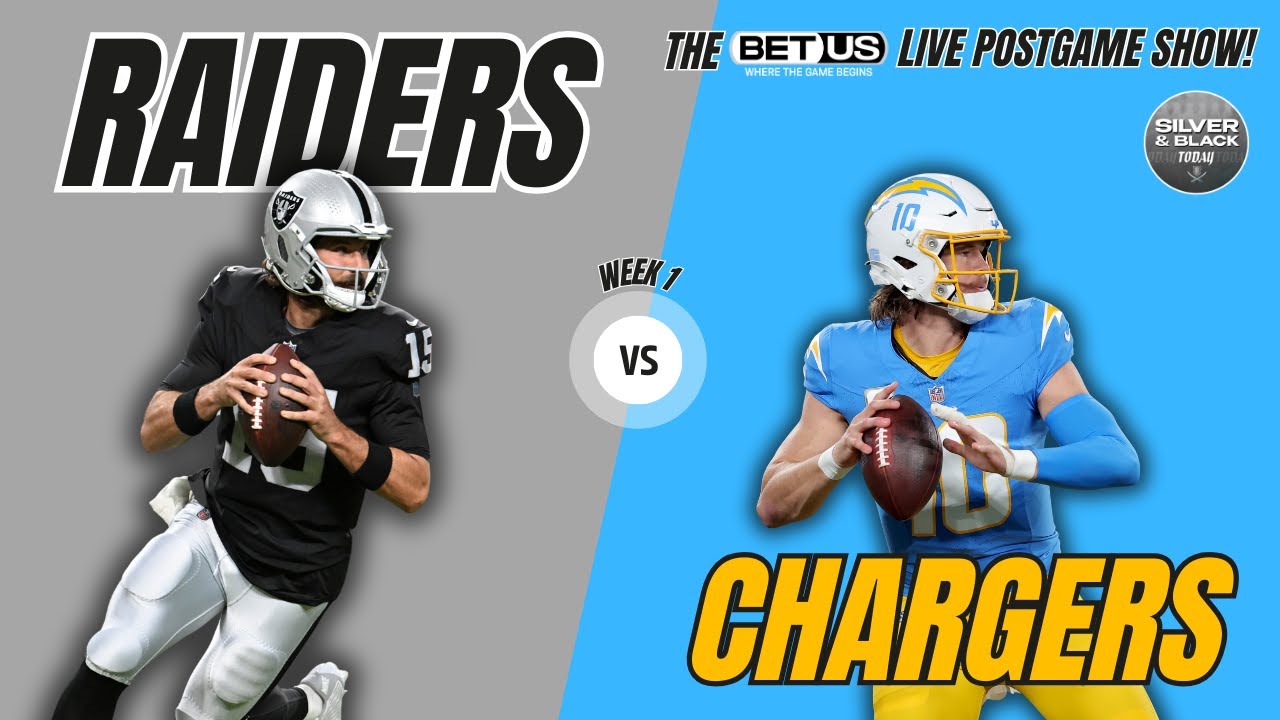
The Los Angeles Chargers vs Las Vegas Raiders match player stats provide a detailed look at how the Chargers built a 34-20 victory through strong passing, a productive rushing attack, efficient scoring and better overall offensive production.
Justin Herbert led the Chargers from the quarterback position, completing 28 of 36 passes for 346 yards, two touchdowns and no interceptions. Quentin Johnston was the biggest receiving producer for Los Angeles, catching 13 passes for 186 yards. Ladd McConkey also made a major contribution with 95 receiving yards.
For Las Vegas, Aidan O’Connell completed 24 of 34 passes for 214 yards, two touchdowns and one interception. Jakobi Meyers led the Raiders with 123 receiving yards and a touchdown, while Brock Bowers added 50 yards and a late touchdown.
The final score tells only part of the story. The Chargers also created a significant statistical advantage in total offense, finishing with 483 yards compared with 264 for the Raiders.
Los Angeles Chargers vs Las Vegas Raiders Match Player Stats at a Glance
| Category | Los Angeles Chargers | Las Vegas Raiders |
|---|---|---|
| Final Score | 34 | 20 |
| Passing Yards | 346 | 225 |
| Rushing Yards | 137 | 39 |
| Total Passing Completions | 28 | 25 |
| Passing Touchdowns | 2 | 2 |
| Interceptions Thrown | 0 | 1 |
| Rushing Touchdowns | 1 | 0 |
| Field Goals | 4/5 | 2/2 |
| Total Points | 34 | 20 |
| Total Offensive Yards | 483 | 264 |
The largest statistical difference came on the ground. Los Angeles produced 137 rushing yards on 35 attempts, while Las Vegas managed only 39 yards on 12 carries.
That created a 98-yard rushing advantage for the Chargers and helped them maintain a more balanced offensive attack.
Justin Herbert Leads the Chargers Offense
Justin Herbert was at the center of the Chargers’ offensive performance.
His final passing statistics were:
- 28 completions
- 36 attempts
- 346 passing yards
- 9.6 yards per attempt
- 2 passing touchdowns
- 0 interceptions
- 1 sack for 10 yards
- 92.2 QBR
- 125.2 passer rating
Herbert completed 77.8% of his passes and averaged 9.6 yards per attempt. That combination gave Los Angeles both accuracy and substantial downfield production.
His performance was not limited to passing. Herbert also rushed four times for 42 yards, averaging 10.5 yards per carry. His longest run covered 41 yards.
That rushing contribution added another dimension to the Chargers offense and helped create additional opportunities when passing lanes were unavailable.
Herbert’s Passing Efficiency Made a Difference
The Chargers completed only three more passes than the Raiders, but the difference in passing yardage was much larger.
Los Angeles finished with 346 passing yards, while Las Vegas recorded 225.
That is a 121-yard difference despite the relatively small gap in completions.
Herbert averaged 9.6 yards per attempt compared with 6.3 for O’Connell. This shows why completion totals alone do not always explain the difference between two quarterback performances.
Quentin Johnston Delivers a Huge Receiving Performance
Quentin Johnston produced the biggest receiving performance of the game for Los Angeles.
His statistics included:
- 13 receptions
- 186 receiving yards
- 14.3 yards per reception
- 14 targets
- 39-yard longest reception
- 0 touchdowns
Johnston accounted for more than half of the Chargers’ 346 receiving yards.
His 13 receptions also represented a significant portion of Herbert’s 28 completions. The high target volume shows how important Johnston was to the passing attack.
He made several important catches during the game, including a 37-yard reception in the first quarter and a 39-yard catch in the fourth quarter.
One interesting part of his performance was that he produced 186 yards without scoring a touchdown. This demonstrates that receiving yards and touchdown production measure different aspects of a receiver’s contribution.
Johnston repeatedly helped move the Chargers into better field position, even when another player ultimately finished the drive.
Ladd McConkey Adds Big-Play Ability
Ladd McConkey provided another major element of the Chargers passing game.
His final numbers were:
- 5 receptions
- 95 yards
- 19.0 yards per reception
- 8 targets
- 47-yard longest reception
- 0 touchdowns
McConkey averaged 19 yards every time he made a catch.
While Johnston was the volume receiver, McConkey provided excellent efficiency and explosive plays. His 95 yards came from only five receptions.
That combination gave the Raiders defense another receiver who could quickly change field position.
McConkey also contributed to the Chargers’ successful two-point conversion near the end of the first half.
Will Dissly and DJ Chark Contribute With Touchdowns
Will Dissly caught five passes for 42 yards and scored one touchdown.
His touchdown came on a two-yard pass from Herbert in the fourth quarter, extending the Chargers’ advantage to 27-13.
DJ Chark Jr. had a much smaller statistical workload, finishing with one reception for six yards.
However, that single reception was important because it resulted in a touchdown.
Chark caught the six-yard touchdown pass with only 10 seconds remaining in the first half.
This is a good example of why reception totals do not always tell the complete story. A player with one catch can still make an important contribution if that catch produces points.
J.K. Dobbins Provides the Chargers With a Reliable Running Game
J.K. Dobbins handled the largest share of the Chargers’ rushing workload.
His rushing statistics were:
- 18 carries
- 63 yards
- 3.5 yards per carry
- 10-yard longest run
Dobbins did not score a rushing touchdown, but his workload helped keep the Chargers offense balanced.
Los Angeles continued using the running game even while Herbert was producing through the air. Dobbins also caught three passes for 12 yards.
His 3.5-yard rushing average was not particularly high, but his 18 carries helped keep the Raiders defense from focusing entirely on the passing attack.
Hassan Haskins Finishes a Long Scoring Drive
Hassan Haskins carried the ball 12 times for 33 yards, averaging 2.8 yards per attempt.
His overall rushing efficiency was modest, but his most important contribution came late in the fourth quarter.
Haskins finished an 81-yard Chargers drive with a two-yard rushing touchdown.
That possession lasted 12 plays and consumed more than seven minutes.
The drive demonstrated how Los Angeles could use its rushing attack and clock management to protect its lead.
At that point, the Chargers did not need to rely on another explosive pass. They needed to control possession, use time and finish the drive with points.
The Chargers Had a Major Rushing Advantage
One of the clearest differences in the Los Angeles Chargers vs Las Vegas Raiders match player stats was the rushing production.
Los Angeles recorded:
- 137 rushing yards
- 35 rushing attempts
- 3.9 yards per carry
- 1 rushing touchdown
Las Vegas recorded:
- 39 rushing yards
- 12 rushing attempts
- 3.3 yards per carry
- 0 rushing touchdowns
The Chargers ran the football 23 more times than the Raiders.
The 98-yard difference gave Los Angeles an important advantage in offensive balance and helped prevent the Raiders from concentrating entirely on stopping Herbert’s passing game.
Aidan O’Connell Provides Two Touchdown Passes
Aidan O’Connell finished as the Raiders’ primary quarterback.
His statistics were:
- 24 completions
- 34 attempts
- 214 yards
- 6.3 yards per attempt
- 2 passing touchdowns
- 1 interception
- 46.0 QBR
- 94.5 passer rating
O’Connell completed 70.6% of his passes and produced two touchdowns.
However, his 6.3 yards per attempt was considerably lower than Herbert’s 9.6.
The Raiders quarterback also threw one interception, while Herbert did not throw one.
That difference contributed to the Chargers’ overall statistical advantage.
Desmond Ridder Sees Limited Playing Time
Desmond Ridder completed one of two pass attempts for 11 yards.
He did not record a touchdown or interception.
His involvement was limited, with O’Connell handling the majority of the Raiders’ passing work.
Jakobi Meyers Leads Raiders Receivers
Jakobi Meyers was the leading receiver for Las Vegas.
His numbers included:
- 9 receptions
- 123 yards
- 13.7 yards per reception
- 10 targets
- 25-yard longest reception
- 1 touchdown
Meyers accounted for more than half of the Raiders’ receiving yardage.
His touchdown came on a 25-yard pass from O’Connell in the second quarter. The play gave Las Vegas a 10-3 lead at the time.
The Raiders showed early signs that they could move the ball effectively through the passing game. However, maintaining that production became more difficult as the Chargers established control.
Brock Bowers Adds a Late Touchdown
Brock Bowers finished with:
- 4 receptions
- 50 yards
- 12.5 yards per reception
- 9 targets
- 21-yard longest reception
- 1 touchdown
Bowers remained heavily involved in the passing game, receiving nine targets.
His touchdown came with 25 seconds left in the fourth quarter and reduced the margin, but Los Angeles had already established a significant lead.
His involvement nevertheless showed that the Raiders continued looking toward their key receiving options while trying to close the gap.
The Raiders Struggle to Establish the Run
The Raiders’ rushing attack was one of the largest statistical differences in the game.
Alexander Mattison led Las Vegas with six carries for 20 yards.
O’Connell added 13 rushing yards on four carries, while Chris Collier recorded six yards on two attempts.
Overall, Las Vegas finished with:
- 12 rushing attempts
- 39 rushing yards
- 3.3 yards per carry
- 0 rushing touchdowns
With so little production on the ground, the Raiders became increasingly dependent on their passing attack.
Once Los Angeles built a lead, the Chargers defense could devote more attention to the Raiders’ passing game without facing a strong rushing threat.
Quarter-by-Quarter Scoring Breakdown
| Quarter | Chargers | Raiders |
|---|---|---|
| First | 3 | 3 |
| Second | 14 | 7 |
| Third | 3 | 3 |
| Fourth | 14 | 7 |
| Total | 34 | 20 |
The opening quarter was tied at 3-3.
The Chargers then outscored Las Vegas 14-7 in the second quarter and entered halftime with a 17-10 advantage.
Both teams scored three points in the third quarter.
Los Angeles then added another 14 points in the fourth quarter, while Las Vegas scored seven.
This scoring pattern shows that the Chargers maintained their advantage rather than relying on a single scoring burst.
The Second Quarter Helped Change the Game
The Raiders entered the second quarter with a 3-0 lead.
O’Connell then connected with Meyers for a 25-yard touchdown, giving Las Vegas a 10-3 advantage.
Los Angeles responded with its own scoring drives and eventually took control.
By halftime, the Chargers had moved ahead 17-10.
The second quarter therefore became an important turning point because Los Angeles responded after falling behind and created a seven-point halftime advantage.
Cameron Dicker Converts Four Field Goals
Cameron Dicker played an important role in the Chargers’ scoring production.
He converted four of five field-goal attempts:
- 33 yards
- 32 yards
- 49 yards
- 20 yards
He also converted both extra points and finished with 14 total points.
His only missed field goal was a 51-yard attempt that went wide left in the first quarter.
Four successful field goals allowed the Chargers to turn multiple scoring opportunities into points, even when those drives did not end with touchdowns.
Daniel Carlson Goes 2-for-2
Daniel Carlson was perfect on field-goal attempts for the Raiders.
He made kicks from:
- 40 yards
- 47 yards
He also converted two extra points.
Carlson finished with eight points.
His accuracy gave Las Vegas dependable kicking production, although the Raiders did not generate enough overall offensive opportunities to match the Chargers’ scoring output.
Chargers Hold the Turnover Advantage
The Chargers recorded one interception during the game.
Daiyan Henley intercepted a pass and returned it four yards.
The Raiders did not record an interception.
Herbert therefore finished the game without a turnover, while O’Connell threw one interception.
The Chargers also recorded five quarterback hits and three tackles for loss, although they did not record a sack.
Las Vegas recorded one sack, five tackles for loss and three quarterback hits.
The defensive statistics suggest that Los Angeles’ impact came through a combination of limiting the running game, creating one turnover and applying pressure rather than relying heavily on sacks.
Total Yardage Shows the Size of the Offensive Gap
Los Angeles finished with:
- 346 passing yards
- 137 rushing yards
- 483 total yards
Las Vegas finished with:
- 225 passing yards
- 39 rushing yards
- 264 total yards
The Chargers therefore produced 219 more total yards than the Raiders.
That difference provides a clear statistical explanation for the 34-20 final score.
Los Angeles controlled both major areas of offensive production: passing and rushing.
Why the Passing Difference Was Important
The Chargers produced 346 passing yards compared with 225 for the Raiders.
That created a 121-yard passing advantage.
Herbert also finished with a 125.2 passer rating compared with O’Connell’s 94.5.
The turnover difference added another layer. Herbert threw two touchdown passes without an interception, while O’Connell threw two touchdowns and one interception.
Taken together, those numbers show why the Chargers were able to generate more consistent offensive production.
Four Elements Behind the Chargers’ Offensive Performance
1. Strong Receiving Volume
Johnston received 14 targets.
McConkey received eight.
Dissly received six.
This gave Herbert multiple options throughout the game.
2. Explosive Plays
McConkey averaged 19.0 yards per reception.
Johnston averaged 14.3 yards per reception.
Herbert also produced a 41-yard rushing play.
The Chargers consistently created opportunities for significant gains.
3. Balanced Rushing Usage
Dobbins received 18 carries.
Haskins received 12 carries.
Herbert added four rushing attempts.
The running game therefore remained part of the offensive plan throughout the matchup.
4. Multiple Ways to Score
Los Angeles scored through field goals, passing touchdowns and a rushing touchdown.
Dicker converted four field goals, while Dissly, Chark and Haskins contributed touchdowns.
That variety helped the Chargers continue adding points throughout the game.
How the Raiders’ Offense Developed
Las Vegas relied heavily on its passing game.
Meyers led the receiving group with 123 yards and a touchdown, while Bowers remained involved with nine targets and a touchdown.
O’Connell completed 24 passes and threw two touchdown passes.
However, the Raiders’ rushing attack produced only 39 yards.
That imbalance made the offense increasingly dependent on passing as the game progressed.
When a team has limited rushing production, the opposing defense can dedicate more attention to the quarterback and receivers, particularly when the team is forced to throw while trailing.
Important Drives in the Game
The final box score shows the result, but individual drives provide additional context.
In the second quarter, Los Angeles produced a 15-play, 56-yard drive that lasted 7:36 and ended with a field goal.
Long possessions like this can be valuable because they:
- Keep the opposing offense off the field
- Consume clock
- Create opportunities for points
- Maintain offensive rhythm
- Put pressure on the defense
Later, the Chargers produced an even longer 12-play, 81-yard touchdown drive that lasted 7:12.
Haskins finished that possession with a two-yard touchdown run.
These drives showed that Los Angeles could generate scoring opportunities through sustained offensive possessions rather than relying exclusively on big plays.
The Fourth Quarter Sealed the Result
The Chargers began the fourth quarter with a 20-13 lead.
Los Angeles then scored twice.
Dissly caught a two-yard touchdown pass from Herbert.
Later, Haskins completed the 81-yard scoring drive with his rushing touchdown.
Bowers added a late touchdown for Las Vegas with 25 seconds remaining, but the Chargers had already created a significant advantage.
The fourth quarter therefore reflected the Chargers’ ability to protect and extend their lead.
Situational Efficiency Was Important
The Chargers scored 34 points through several different methods.
Their scoring included:
- Four field goals
- Two passing touchdowns
- One rushing touchdown
- Extra points
- A successful two-point conversion
This variety mattered because not every successful offensive possession needs to end in a touchdown to contribute to a winning score.
Los Angeles repeatedly turned field position and offensive opportunities into points.
Key Individual Performances
Justin Herbert
Herbert completed 28 of 36 passes for 346 yards, two touchdowns and no interceptions. He also added 42 rushing yards.
Quentin Johnston
Johnston recorded 13 receptions for 186 yards on 14 targets, making him the Chargers’ leading receiver.
Ladd McConkey
McConkey caught five passes for 95 yards and averaged 19.0 yards per reception.
J.K. Dobbins
Dobbins carried the ball 18 times for 63 yards and provided the Chargers with their largest rushing workload.
Hassan Haskins
Haskins rushed 12 times for 33 yards and scored an important two-yard touchdown late in the game.
Cameron Dicker
Dicker converted four field goals and two extra points for 14 total points.
Jakobi Meyers
Meyers led Las Vegas with nine receptions for 123 yards and one touchdown.
Brock Bowers
Bowers recorded four receptions for 50 yards and scored a late touchdown.
Most Important Numbers From the Match
Several statistics stand out when reviewing the Los Angeles Chargers vs Las Vegas Raiders match player stats.
483 total yards: Los Angeles produced this total compared with 264 for Las Vegas.
346 passing yards: Herbert’s passing performance was the foundation of the Chargers offense.
186 receiving yards: Johnston recorded the game’s largest individual receiving total.
137 rushing yards: The Chargers maintained a meaningful ground presence.
39 rushing yards: The Raiders struggled to generate consistent production on the ground.
0 interceptions by Herbert: The Chargers quarterback protected the football.
1 interception by the Chargers defense: Henley’s interception gave Los Angeles the turnover advantage.
14 points from Dicker: The kicker converted repeated scoring opportunities.
What the Box Score Does Not Explain
Statistics provide a useful summary, but they do not capture every detail of a football game.
For example, Johnston’s 186 receiving yards do not mean that every reception had the same value.
Some catches produced first downs.
Others improved field position.
Some helped extend long scoring drives.
The same applies to Haskins.
His 2.8 yards per carry does not fully describe his contribution because one of his most important plays was the late rushing touchdown that helped put the game away.
Football statistics must therefore be considered alongside the score, time remaining, down, distance and game situation.
How to Analyze These Player Stats
When reviewing a box score for fantasy research, historical analysis or general football study, it helps to examine several categories together.
Start With the Quarterback
Look at completions, attempts, completion percentage, yards per attempt, touchdowns, interceptions and passer rating.
Check Offensive Volume
Targets and carries help show which players were consistently involved.
Compare Efficiency
Yards per attempt and yards per reception can reveal how much production players generated from their opportunities.
Look at Scoring
Touchdowns and field goals show which players and units actually finished drives.
Consider Game Context
Finally, determine when the statistics were produced.
Production during a close part of the game can have a different context from statistics recorded after one team has established a substantial lead.
Fantasy Football Takeaways
Several players produced notable fantasy-relevant statistics in this matchup.
Herbert recorded 346 passing yards and two touchdowns while adding 42 rushing yards.
Johnston’s 186 receiving yards were the highest receiving total of the game.
McConkey produced 95 yards on only five receptions, giving him an impressive yards-per-catch figure.
Dissly and Chark both contributed receiving touchdowns.
For Las Vegas, Meyers produced 123 yards and a touchdown, while Bowers recorded nine targets and a touchdown.
However, one-game fantasy production should not automatically be treated as a prediction of future performance. Usage, targets, carries and opponent strength can change from one game to another.
Historical Context of the Result
The Chargers entered the matchup with a 10-6 record and improved to 11-6 following the victory. The Raiders finished the season at 4-13.
Los Angeles also finished 6-3 on the road, while Las Vegas was 2-6 at home.
The victory secured the Chargers the AFC’s No. 5 seed according to the game information used for this matchup.
That postseason context made the result meaningful for Los Angeles. The Chargers had a clear incentive to maintain their level of performance and finish the season strongly.
Frequently Asked Questions
What was the final score between the Chargers and Raiders?
The Los Angeles Chargers defeated the Las Vegas Raiders 34-20.
Who was the leading passer?
Justin Herbert led the game in passing, completing 28 of 36 attempts for 346 yards, two touchdowns and no interceptions.
Who led the Chargers in receiving?
Quentin Johnston led the Chargers with 13 receptions for 186 yards on 14 targets.
Who led the Raiders in receiving?
Jakobi Meyers led Las Vegas with nine receptions for 123 yards and one touchdown.
How many rushing yards did the Chargers record?
The Chargers finished with 137 rushing yards on 35 attempts.
How many rushing yards did the Raiders record?
The Raiders recorded 39 rushing yards on 12 attempts.
How many total yards did the Chargers have?
Los Angeles finished with 483 total offensive yards.
How many total yards did the Raiders have?
Las Vegas finished with 264 total offensive yards.
Did Justin Herbert throw an interception?
No. Herbert threw two touchdown passes and finished without an interception.
Who scored the Chargers’ rushing touchdown?
Hassan Haskins scored the Chargers’ late rushing touchdown on a two-yard run.
Conclusion
The Los Angeles Chargers vs Las Vegas Raiders match player stats show how Los Angeles built its 34-20 victory through a combination of quarterback efficiency, receiving production, rushing volume and reliable scoring.
Justin Herbert completed 28 of 36 passes for 346 yards, two touchdowns and no interceptions. Quentin Johnston was the leading receiving producer with 186 yards, while Ladd McConkey added 95 yards at 19.0 yards per reception.
The Chargers also produced 137 rushing yards, with J.K. Dobbins handling 18 carries and Hassan Haskins finishing the game with an important rushing touchdown.
The Raiders had several productive individual performances. O’Connell threw for 214 yards and two touchdowns, Meyers recorded 123 receiving yards and a touchdown, and Bowers added 50 yards and a late score.
However, Las Vegas struggled to establish the running game, producing only 39 rushing yards.
The overall statistical difference was substantial. Los Angeles finished with 483 total yards compared with 264 for Las Vegas, while also winning the turnover battle.
The numbers therefore provide a clear picture of how the game developed: Herbert and the Chargers passing attack generated explosive production, the rushing game provided balance, and Los Angeles consistently converted opportunities into points.
For readers analyzing this matchup, looking at the full box score together with the scoring sequence gives a much clearer understanding than relying on the final score alone.
About the Author